
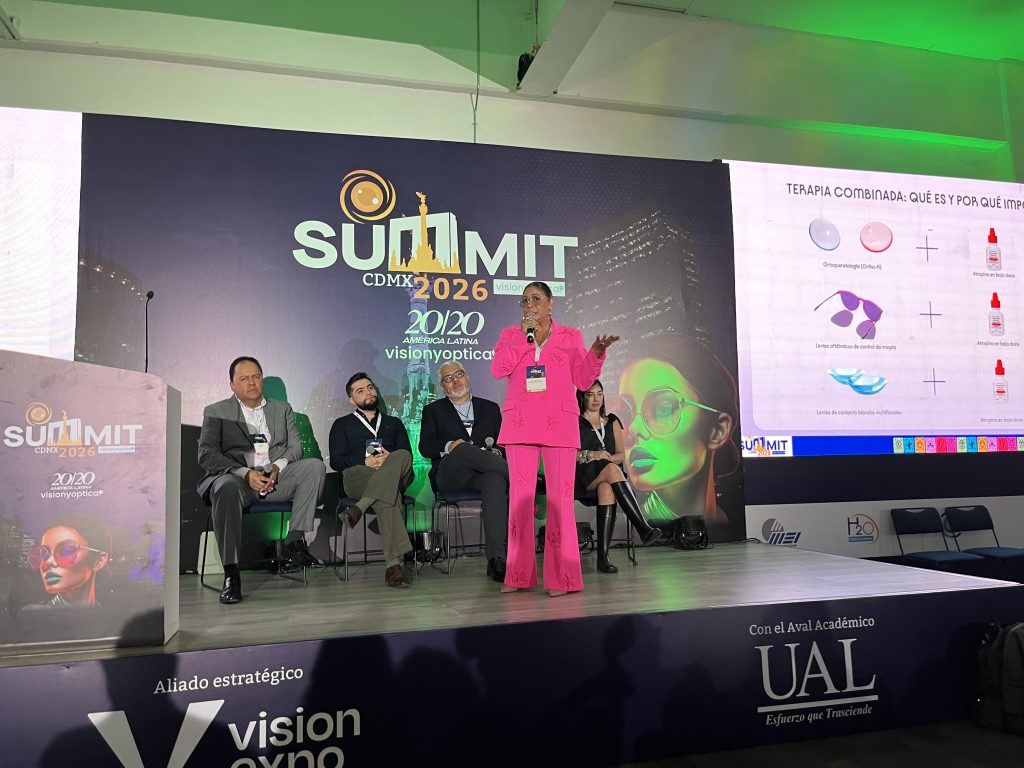
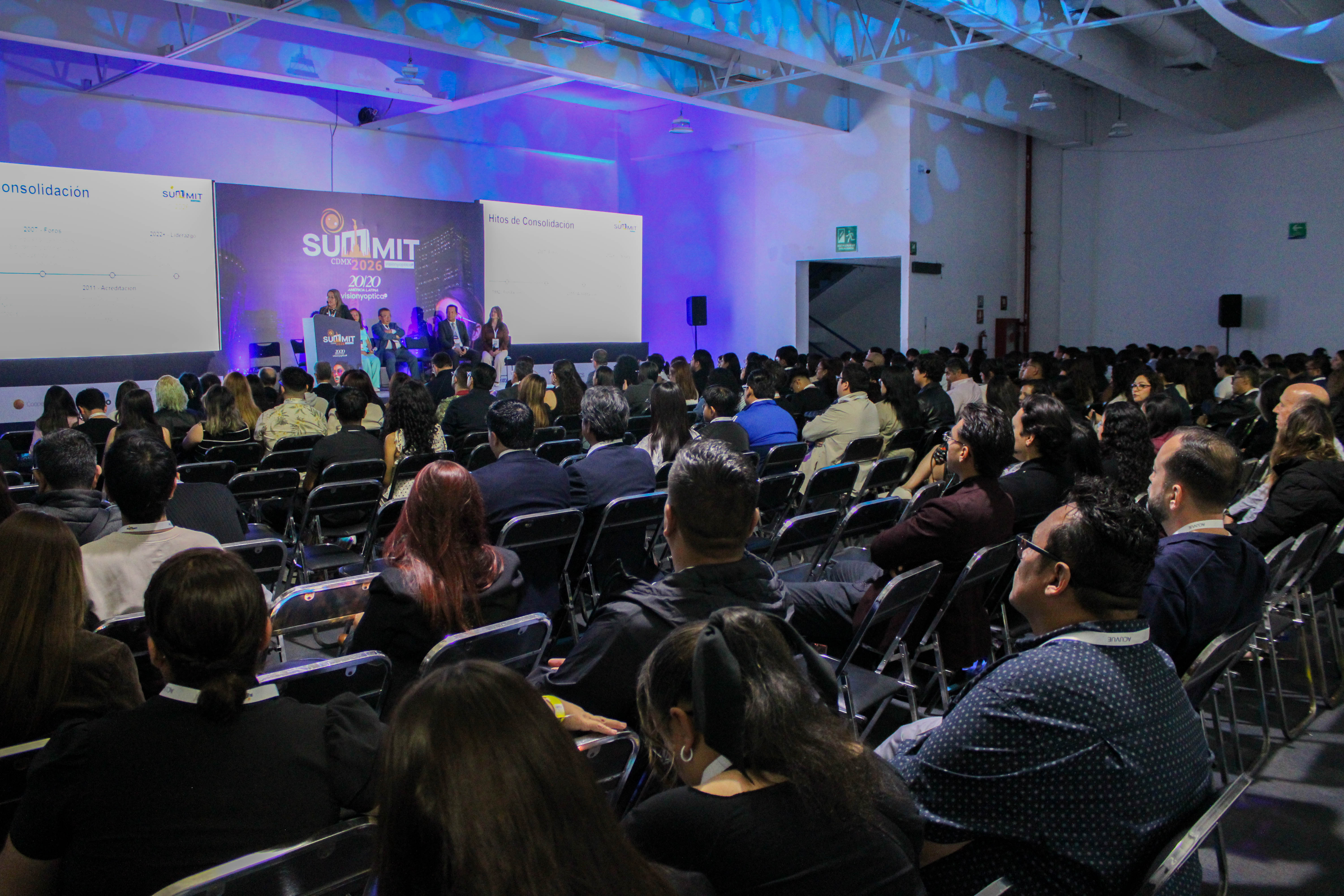
From August 20–22, the Summit VisionyOptica™ 2026 brought together professionals from various disciplines at ExpoReforma in Mexico City to share knowledge and experiences aimed at strengthening patient care and fostering the growth of the Latin American optical industry.
In the Ciencias de la Visión and Optica y Gestión sessions, conferences, symposia, and panel discussions addressed topics that are currently transforming the sector: myopia control, artificial intelligence, ocular surface, contact lenses, neuroscience, visual rehabilitation, customer experience, and business management.
An Agenda Built on Collaboration
The event began with the academic forum on the optometrist training program, featuring representatives from the Instituto Politécnico Nacional CICS Santo Tomás, Universidad de la Salle de Colombia, and the Universidad Nacional Autónoma de México Fez-Iztacala. The opening session sparked a discussion on training professionals to meet the demands of comprehensive vision care.
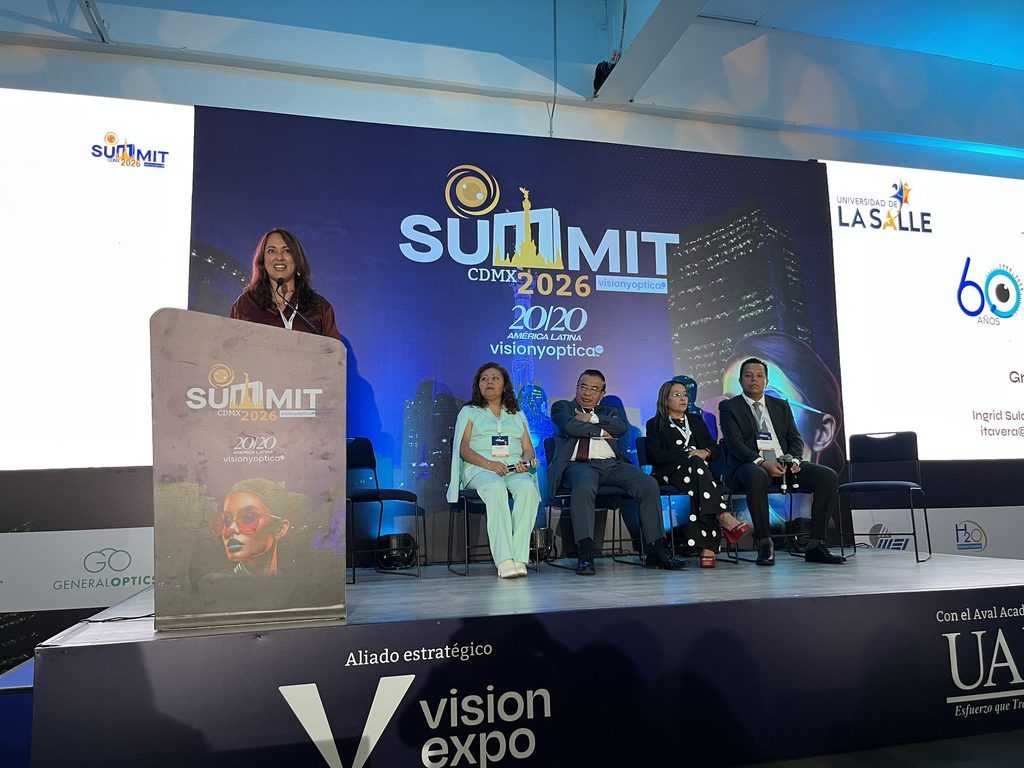
The dialogue continued with a panel on interdisciplinarity, moderated by L.O. Salvador González, alongside Dr. Juan Daniel Rodríguez Choreño, Dr. Verónica Sánchez, Mtro. Aarón Bautista Delgado, Mtra. Rosa María García González, and Dr. Ingrid Sulay Tavera.
This collaborative approach was also evident in the presentations by Dr. Valeria Sánchez, who addressed referrals and counter-referrals between optometry and ophthalmology, and by Leonardo Orjuela, O.D., who emphasized the importance of building trusting relationships between the two professions.
Myopia and Evidence-Based Decisions
Myopia control was one of the central themes of the program. Dr. Vanesa Bosch, Dr. Glenda Alemán Moheeputh, Opt. Fabio Murillo Obando, and L.O. Ricardo Pintor participated in a symposium moderated by Nelson Merchán, O.D., in which they reviewed the barriers and opportunities for managing this condition in Latin America.
Dr. Glenda Alemán also delved into evidence-based clinical decisions and presented a lecture on building profitable, high-impact business models centered on myopia control.
The topic was complemented by presentations by Nelson Merchán on Stellest 2.0, Stephanie Pineda on MiSight 1 Day, and Optometrist Rafael Pérez Mejía on the use of atropine, which allowed for the integration of clinical perspectives with industry-developed alternatives.
Clinical Update for More Precise Care
The lectures also provided tools for addressing common and complex situations in professional practice. Dr. Ricardo Flores addressed complications associated with contact lenses; Ricardo Pintor presented on corneal-scleral profilometry; and Ricardo Mojica, O.D. shared correction options for irregular corneas.
Regarding the ocular surface, Dr. Jorge Valdez explained key points for differentiating between dry eye and allergies, while Dr. Selma Alin Somilleda-Ventura offered insights into the inflammatory component of keratoconus.
Presbyopia was analyzed by L.O. Sandra Rábago and Ricardo Mojica, O.D., who reviewed new paradigms in its management. L.O. Luis Villar Saldaña of Johnson & Johnson joined this discussion, presenting strategies related to multifocal contact lenses and solutions for patients with astigmatism.
Dr. Myrna Miriam Valera Mota, for her part, examined alterations in color perception associated with biological, toxic, and phototoxic agents.
Artificial Intelligence and New Visual Frontiers
Mtra. Carmen Gorostieta presented the possibilities of artificial intelligence applied to visual health, while Leonardo Orjuela, O.D. explored how generative tools can transform optometric practice.
The potential of these technologies was also highlighted in the presentations by Lic. Opt. Iván Bedolla of EssilorLuxottica and L.O. Sandra Rábago of Smart Mirror, who discussed their integration into new products, digital designs, and measurement processes.
In neuro-optometry, L.O. Efraín Castellanos Bahena, O.D., M.S., FCOVD delivered a keynote lecture on the complete cycle of vision care, from early diagnosis to functional rehabilitation. He also presented strategies for integrating this specialty into a sustainable and differentiated clinical model.
Dr. Nadia Yael Morales Rodríguez discussed the relationship between primitive reflexes, visual symptoms, and academic performance, while Drs. Martha López, Liliana López, Verónica Terán, and Sara Pineda shared their experiences with brain neuromodulation applied to visual therapy.
The agenda also included clinical cases presented by Martha Uribe García and Ruth Eva Hernández Carbajal, as well as a symposium on low vision led by Nancy Sol Espíndola Romero, Yazmín Gutiérrez Arroyo, and Ana Marcela González.
Knowledge That Also Transforms Business
In the Optica y Gestión Room, the discussion focused on the tools needed to build more competitive businesses.
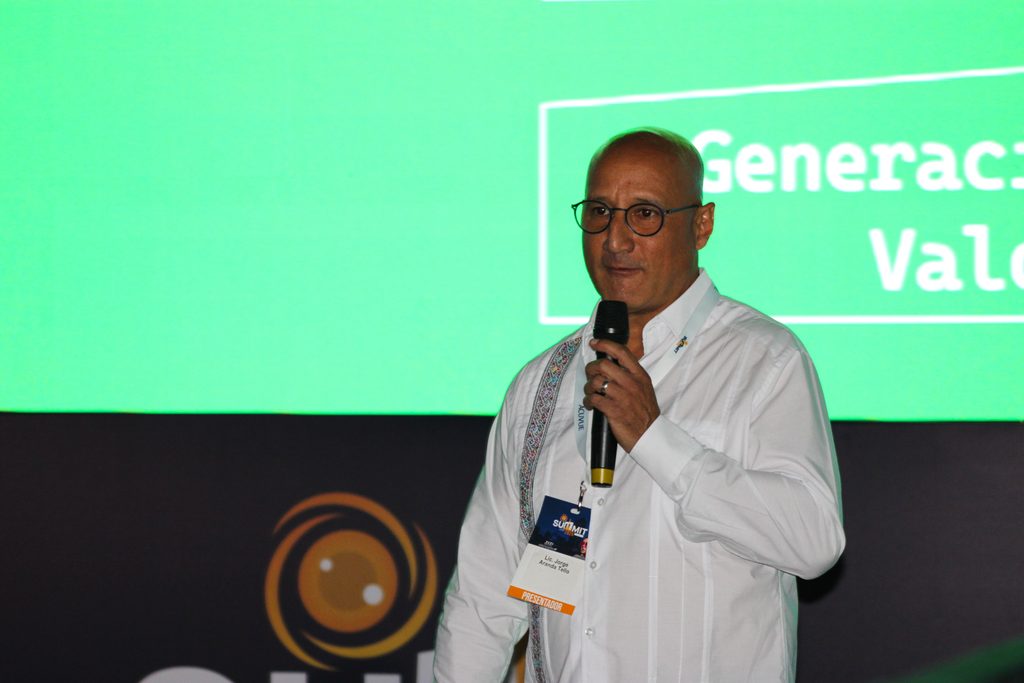
Jorge Aranda Tello, Opt. and business administrator Diego Ramírez presented a model that integrates clinic, service, and style; Carlos Palencia, O.D. analyzed the connection between physical and digital experiences, and Orlando Escalona shared strategies related to purchasing, repeat business, and referrals.
TED speaker Elly Semillera invited attendees to reflect on the transformative capacity of professionals in the sector, while Haide Ambriz Padilla, M.A. highlighted the role of communication in the practice of health professions.
Héctor Serna, commercial director of Creative Latin Media, discussed the digital ecosystem in the optical industry; José Joaquín Díaz presented key strategies for strengthening personal branding, and Dr. Jorge Valdez shared his perspective on social entrepreneurship, impact, and community.
Opt. Fabio Murillo Obando shared his experience in pediatric optometry with OptoKids, while Ing. Julio Jinesta clarified concepts related to anti-reflective filters and coatings. SIOU, for its part, addressed emotional intelligence applied to hiring and recognized the contribution of independent laboratories through its annual award.
The participation of national and international specialists, optometrists, ophthalmologists, entrepreneurs, and industry representatives confirmed the breadth of an agenda that made professional diversity its main strength. The Summit VisionyOptica™ 2026 demonstrated that the future of the sector depends on integrating knowledge, collaboration, and new ways of responding to patients’ needs.